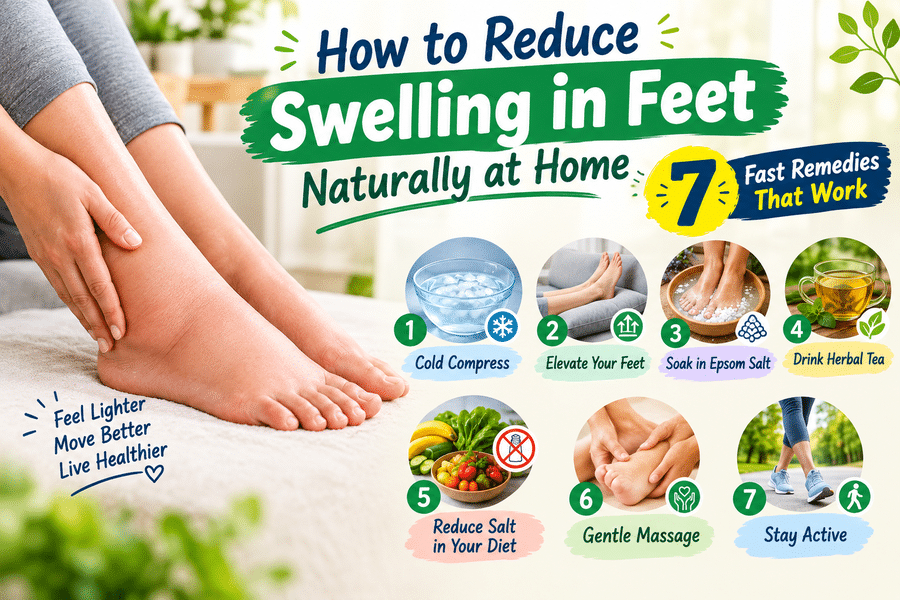
Swollen feet and ankles can make every step feel heavy, uncomfortable, and frustrating. Whether the puffiness showed up after a long day on your feet, a salty meal, or just from the heat, you’re not alone—and you don’t have to wait it out in misery. Learning how to reduce swelling in feet naturally at home can bring real relief with simple, safe steps you can start right now.
Here are the top 4 quick-relief actions many people find most helpful:
- Elevate your legs above heart level for 15–20 minutes
- Drink a big glass of water to help flush excess sodium
- Soak your feet in warm Epsom salt water
- Do a few minutes of gentle ankle pumps and foot circles
These natural approaches focus on improving circulation, reducing fluid retention, and supporting your body’s own drainage systems. Below you’ll find clear explanations, step-by-step remedies, prevention habits, and important safety notes.
Common Causes of Swollen Feet (Edema)
Swelling in the feet and ankles (often called edema) happens when fluid builds up in the tissues. Everyday factors frequently trigger it:
- Prolonged sitting or standing – Gravity pulls fluid downward when you stay in one position for hours (desk work, long flights, retail shifts).
- High sodium intake – Salty foods cause the body to hold onto water.
- Heat and humidity – Warm weather expands blood vessels and can increase fluid leakage into tissues.
- Pregnancy – Extra blood volume and pressure from the growing uterus commonly cause swelling, especially later in pregnancy.
- Minor injury or overuse – A twisted ankle, long walk, or new shoes can create temporary inflammation.
- Circulation or lymphatic slowdown – Age, excess weight, certain medications, or reduced movement can make fluid clearance less efficient.
Most of these causes respond well to simple home measures. Persistent, sudden, or one-sided swelling, however, deserves medical attention (see the safety section at the end).
7 Proven Natural Home Remedies for Relief
These remedies are practical, low-cost, and can be combined. Start with elevation and hydration for the fastest noticeable difference.
1. Leg Elevation (The 15–20 Minute Rule)
Lie down and prop your feet and lower legs so they sit above the level of your heart. Use pillows, a couch arm, or a recliner. Stay in this position for 15–20 minutes. Gravity helps pull excess fluid back toward the core where your body can process it more easily. Repeat two to three times a day, especially in the evening. Many people notice reduced tightness within the first session.
2. Hydration – Drink More Water, Not Less
It sounds counterintuitive, but drinking enough water helps your kidneys flush excess sodium and reduce fluid retention. Aim for steady sips throughout the day rather than large amounts at once. A good starting target for many adults is around 2–3 liters, adjusted for activity, climate, and individual needs. Keep a water bottle nearby and pair hydration with lower-sodium meals for better results.
Ayurveda Rules of Drinking Water
3. Epsom Salt Foot Soak
Fill a basin with comfortably warm (not hot) water and dissolve ½ to 1 cup of Epsom salt (magnesium sulfate). Soak your feet and ankles for 15–20 minutes. Magnesium can support muscle relaxation and may help ease the sensation of tightness. After soaking, gently pat dry and elevate your legs for extra benefit. Use this once daily when swelling is noticeable.
4. Gentle Movement & Ankle Pumps
Complete stillness allows fluid to pool. Simple circulation boosters work well:
- Sit or lie down and slowly point your toes away from you, then flex them back toward your shin (ankle pumps). Do 10–15 repetitions on each foot.
- Make slow circles with your ankles in both directions.
- Take short walking breaks every hour if you’ve been sitting or standing still.
These micro-movements activate the calf muscle “pump” that helps push fluid upward.
5. Compression Socks
Graduated compression socks apply gentle pressure that supports veins and reduces fluid accumulation. Put them on in the morning before swelling builds, and wear them during the day—especially if you stand or sit for long periods or travel. Choose a mild to moderate compression level (often labeled 15–20 mmHg) unless a healthcare provider recommends something stronger. Remove them at night and wash regularly.
6. Dietary Adjustments
Cut back on high-sodium foods (processed snacks, canned soups, fast food, excess table salt) for a few days and notice the difference. At the same time, add potassium-rich foods that help balance sodium: bananas, avocados, spinach, sweet potatoes, beans, yogurt, and oranges. A lower-sodium, higher-potassium pattern supports healthier fluid balance for many people.
7. Self-Massage / Lymphatic Drainage
Use light, upward strokes to encourage fluid movement toward the heart. Start at the toes and gently stroke toward the ankle, then from the ankle up the lower leg. Keep pressure soft—think “skin glide” rather than deep tissue work. Spend 5–10 minutes per leg, preferably while elevated or right after a soak. Avoid massaging if the area is painful, red, or injured.
Simple Lifestyle & Prevention Tips
Small daily habits make a big difference in keeping swelling from returning:
- Take movement breaks every 45–60 minutes—stand, walk, or do ankle pumps.
- Elevate your feet whenever you sit for extended periods (use a footstool or ottoman).
- Stay consistent with water intake and moderate sodium.
- Choose supportive, non-restrictive footwear and avoid prolonged high heels.
- Maintain a healthy weight range if relevant—extra weight can increase pressure on leg veins.
- Sleep with a pillow under your lower legs if nighttime swelling is an issue.
- In hot weather, stay cool, hydrated, and limit long outdoor standing.
Consistency beats intensity. Most people see better day-to-day control when these habits become routine.
When to See a Doctor
Safety Warning
Natural home remedies work well for mild, temporary swelling caused by lifestyle factors. Seek prompt medical care if you notice any of the following:
- Sudden swelling in only one leg or ankle
- Swelling accompanied by chest pain, shortness of breath, or difficulty breathing
- Severe pain, warmth, redness, or skin that feels hard or discolored
- Swelling that appears after a significant injury or does not improve with elevation and rest
- Unexplained swelling that keeps returning or worsens over days
These signs can indicate blood clots, infection, heart or kidney issues, or other conditions that need professional evaluation. Pregnant individuals should also check with their healthcare provider about new or significant swelling.
Swollen feet are uncomfortable, but you now have a clear set of natural tools—elevation, hydration, Epsom soaks, movement, compression, smart eating, and gentle massage—to reduce the swelling and feel lighter on your feet. Start with the quick-relief steps, layer in the remedies that fit your day, and protect your progress with simple prevention habits. Relief is often closer than you think.